Skip to content

AQUAoil oil and grease separators

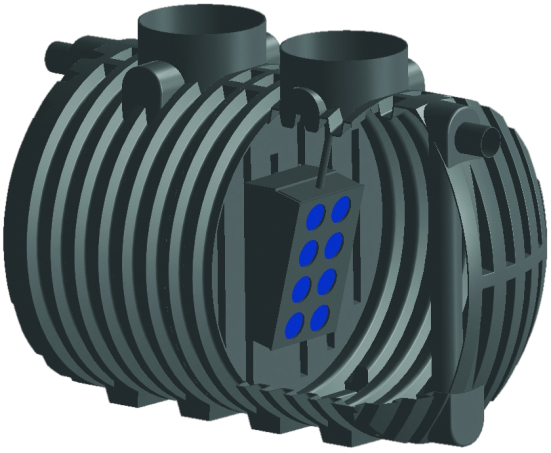
AQUAoil oil separators are designed for the efficient separation of stormwater and wastewater from light liquids such as fuels and oils (with a density lower than 0.95 kg/l), which pose a serious risk of groundwater contamination. They represent a key solution for ensuring environmental safety and regulatory compliance.

They remove oil – protect groundwater – ensure compliance

Oil separators are a fundamental solution for preventing water pollution. Even a minimal amount of oil can cause extensive environmental damage, which makes their use essential both for environmental protection and for meeting legal requirements.

Our systems provide:

  • high efficiency in separating light liquids,
  • reliable and long-term operation,
  • compliance with current environmental standards,
  • easy maintenance and operation.

AQUAoil oil separators are especially recommended for locations with a higher risk of oil and fuel discharge:

  • petrol stations,
  • large parking garages,
  • truck parking areas,
  • mechanical and tire service workshops,
  • car wash facilities,
  • hospitality establishments (where grease separators are legally required).
  • Katalog
  • Handbuch
  • Installation and maintenance instructions for systems

    Ansehen
  • Installation and operating instructions for SQUEALER

    Ansehen

How do they work?

Oil separators operate on the principle of gravitational separation and multi-stage filtration. Lighter liquids (oils and fuels) rise to the surface, while the treated water is discharged further into the sewer system.

The products are designed and dimensioned in accordance with the SIST EN 858 standard and tested using state-of-the-art testing methods. They are characterized by low weight for easy transport and installation, long material lifespan, and the use of polyethylene, which is particularly suitable for recycling and environmentally friendly. Easy maintenance and servicing are also ensured, and the product is manufactured by a Slovenian producer.

Our offer

Our range includes various types of separators tailored to specific needs:

Gravity oil separators: Separation occurs naturally – light liquids rise to the surface, while treated water is discharged through a submerged outlet pipe.

Coalescing oil separators: Equipped with a settling and separation chamber as well as a coalescing filter, enabling efficient removal of even very small hydrocarbon particles.

Coalescing oil separators with bypass: In the case of large volumes of stormwater, excess flow is diverted through a bypass, preventing system overload and flooding.

Grease separators: Designed to retain organic substances and fats from wastewater, particularly in the hospitality sector, where their use is legally required.

Oil separator categories

Selecting the appropriate oil separator must be based on a detailed analysis of the installation site, as project conditions directly affect system sizing and configuration. Only a properly selected and dimensioned separator ensures optimal oil separation and compliance with applicable regulations.

An important component of oil separators is the sludge trap (sedimentation chamber). This is the part of the unit where solid particles (sand, sludge, and larger debris) settle at the bottom before the oil-contaminated water proceeds to further treatment stages.

The table below shows the minimum sludge trap volume depending on the installation location. The data is based on the SIST EN 858 standard.

IMPORTANT: The appropriate oil separator category is determined by the designer. The sludge trap volume must be defined in accordance with the table below.

Category Application of oil separator Minimum sludge trap volume
Small For water with low sediment content – e.g. collection areas at petrol stations, lightly loaded parking areas (100 × NS) / fd a
Medium Petrol stations, manual car washes, garages, parking areas, industrial facilities, power plants (200 × NS) / fd b
High Truck washes, city buses, agricultural vehicles, automatic car washes (300 × NS) / fd b
(300 × NS) / fd c

Notes:

a – the equation does not apply to separators smaller than NS 10, except for covered parking areas
b – regardless of the equation, the minimum sludge trap volume must not be less than 600 l
c – regardless of the equation, the minimum sludge trap volume must not be less than 5000 l

Consulting and selection

The catalog presents standard models of oil separators; however, for optimal selection based on the specific requirements of your project, we recommend consulting with our experts. We provide a solution that is technically appropriate, cost-effective, and fully compliant with all regulatio